
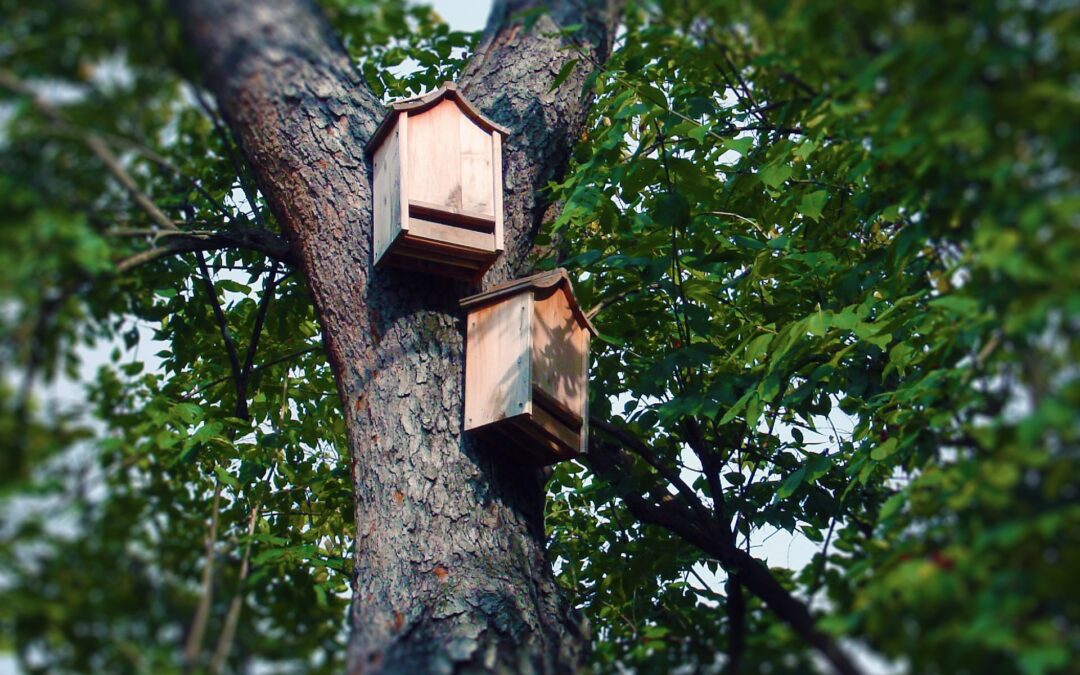
Renovate without Destroying Wildlife Habitat
When I moved into a house in June 2021, it had a large field behind the back garden & I often saw squirrels, birds & cats. Now a small development has begun to be built, I realise that I don’t see nearly as much wildlife as before.
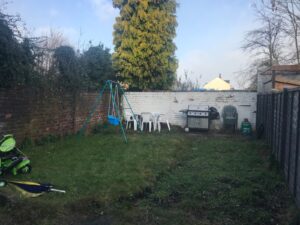
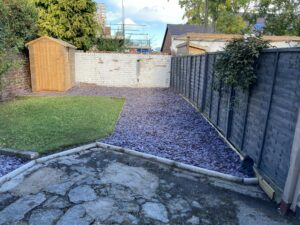
My back garden was also in a derelict, overgrown state & I have covered most of it with grey slate shingles to be low maintenance, but kept the lawn. So, I too am guilty of reducing the wildlife habitat so I am going to think of ways of putting out bird food etc without attracting mice & rats. Although they too are wildlife, I just don’t want them near my house!
Garden before…
Garden After… but I have since painted the rear wall brilliant white & hung two bird feeders from the eaves of the shed
So, how can we renovate & extend without damaging the flora & fauna habitats?
If you’re thinking about renovating or planning an extension, it will be inevitable that there will be some disruption to your garden or outdoor space
Ideally, before starting any work your architect or garden designer should ensure there are no protected species or habitats that could be negatively affected. There are several items of legislation in the UK that exist to protect species such as bats and wild birds, e.g., the Wildlife & Countryside Act 1981. There will be similar legislations wherever in the World you are living. A site assessment might be required before work can begin.
The Bat Conservation Trust says ‘Any structures or place which bats use for shelter or protection are protected from damage or destruction whether occupied or not.’
Getting advice is essential as it is illegal to disrupt the habitat of a protected species.
The next step is to consider how best to protect any other existing wildlife, & ensure any disruption from your work is kept to a minimum. Check for swifts, house martins etc in the roof space as building work cannot take place during the nesting season of Swallows & other seasonal migratory birds. Exercise great care between March and August as this is the bird breeding season.
Mature trees, hedges and ponds will have well-established wildlife communities. These will be long established habitats and difficult to replace. Flowerbeds, lawns and vegetable patches tend to have much younger habitats & more mobile wildlife communities
Hedgerows function as navigation aids for bees and bats & provide food, shelter& roosting for many garden birds, including robins, blackbirds, and chaffinches.
The best place for an extension, from this viewpoint, is to extend onto an area already covered by hard landscaping or a patio.
Trees or groups of trees might be protected by a Tree Preservation Order which will prohibit any cutting, uprooting or wilful damage to the tree. Generally, this order applies to trees in public spaces, but it can extend to privately owned trees. Check with your local authority who will be able to advise you. You must also consider whether the work will impact tree roots, even if it spares the tree.
In the UK there will soon be a legal requirement for large developments to deliver a ‘10% biodiversity net gain’ which means that there is more wildlife after the development that before it started.
This won’t affect small extensions but it is a great principle to follow for the sake of the planet… so here are some ideas that can all be included in your development plans
- Add a green roof or green wall to either the extension or the existing building
- Add integral wildlife bricks for swifts or bats, or nesting cups for house martins.
- Plant trees & hedgerows around the boundaries
- Transform a lawn into a wildflower meadow for butterflies, bees & other insects
- Add a water feature or pond. Small amphibians are thought to be more common in gardens ponds that in the countryside. Obviously, the safety of children & pets must be paramount but there are some lovely wrought iron pond covers available.
- Try to reduce or remove light pollution as it is a big problem for wildlife & plants
- Contribute to a local woodland or nature reserve to offset the impact of your development.
- Consider making your extension carbon neutral, utilising the best sustainable energy & materials
- Capture rainwater for use in the garden or even a new bathroom
Whatever you can do to help wildlife, however small, is incredibly valuable
Here are more ideas…
https://www.rspb.org.uk/get-involved/activities/nature-on-your-doorstep/
https://www.wildlifetrusts.org/actions
I am sure that wherever you are in the World there will be similar organisations that you can get ideas from.
What can you do to help? Do let me know…


